
FoodSeoul
Kimchi Jjigae in Seoul: What It Is and How to Order
Kimchi jjigae is one of Korea's most popular stews. Here's what goes into it, how spicy it is, what to ask for, and how to eat it with rice.
On this page
By Bong Tour Editorial Team · Nov 27, 2026
When the temperature drops in Seoul, kimchi jjigae is the stew a lot of locals reach for. The Korea Tourism Organization calls it one of the most popular stews in Korea. If it's your first time ordering it, here's what to expect in the pot and how to eat it.
QUICK FACTS
What: stew of aged, sour kimchi boiled with pork
Common extras: tofu; tuna, ham or ramen noodles instead of pork
Spice: spicy and sour
Comes with: a bowl of rice
Watch out: may contain meat, seafood or fish sauce even when the name doesn't say so
What's in the pot
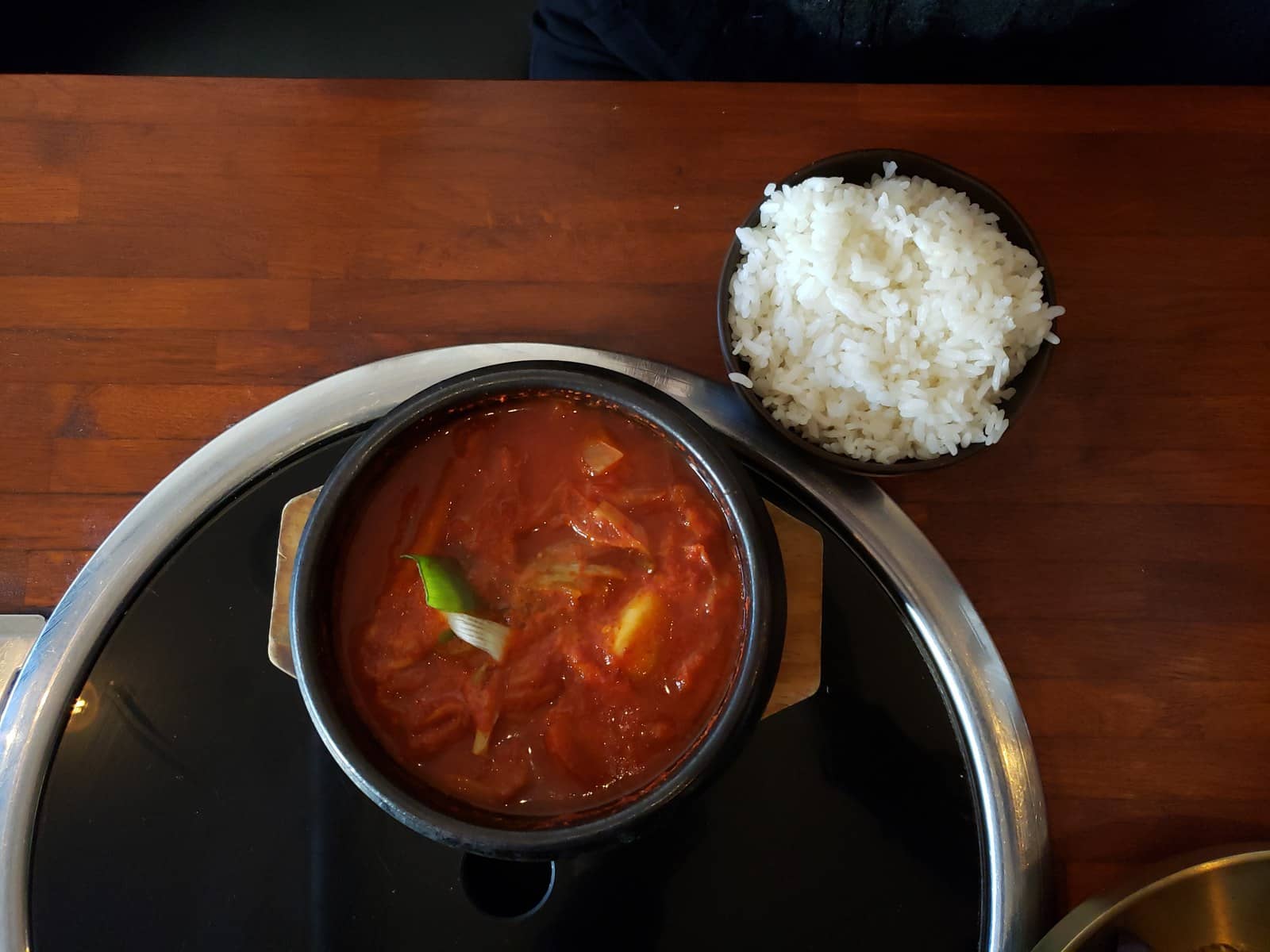
Kimchi jjigae is made with well-fermented, sour kimchi rather than fresh kimchi. The Korea Tourism Organization describes kimchi aged more than six months boiled in a pot with large chunks of pork. Many versions add tofu. Some places use tuna, ham, or ramen noodles in place of pork.
The flavor is spicy and sour, and it gets richer the longer it boils. That's why you'll often see it brought to the table still bubbling.
Pork, tuna, or something else
Version | What changes |
|---|---|
Pork | the classic, with large chunks of pork |
Tuna | canned tuna instead of pork |
Ham or noodles | ham or ramen noodles used instead of pork |
Menus in English may call it "kimchi stew." If you want a specific version, point at the menu line or ask the staff. A simple phrase is kimchi jjigae juseyo ("kimchi stew, please").
How to eat it
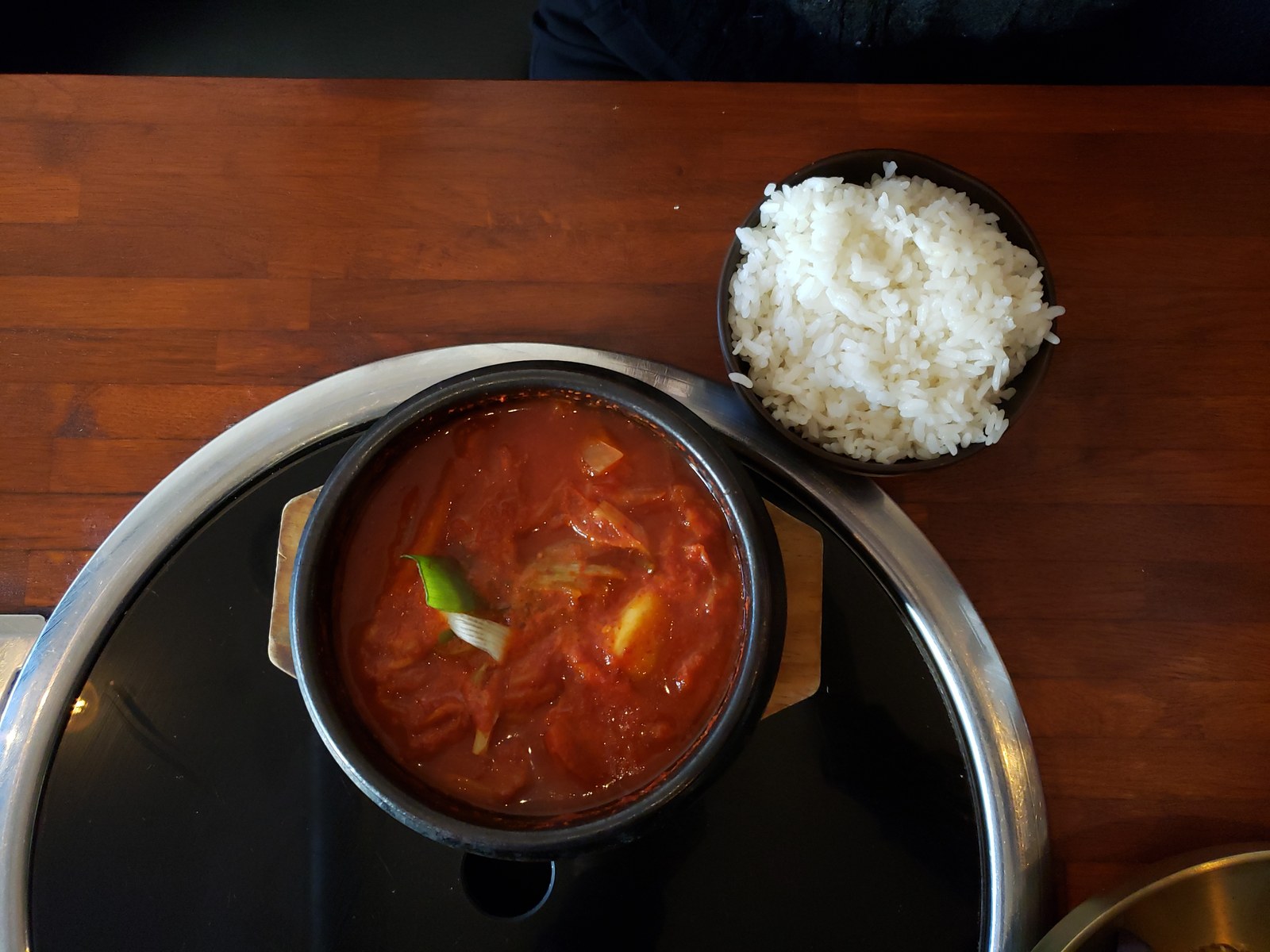
Let it bubble for a minute if it arrives on a burner. It keeps getting deeper in flavor.
Take a spoonful of broth with a little rice. Korean stews are eaten as a meal with rice, not as a starter soup.
Eat the side dishes with it. Small plates of banchan usually come with the meal.
Koreans eat kimchi jjigae as a meal, but it also goes well with drinks, so you'll see it at dinner too.
If you don't eat pork or meat
The Korea Tourism Organization notes that many Korean dishes use meat, seafood, or fish sauce even when the name doesn't say so. If you're vegetarian, or avoid pork or beef, ask the restaurant before you order. Tuna kimchi jjigae is a common swap if you just want to skip pork.
Is it very spicy?
It is spicy, and the sourness of aged kimchi makes it feel sharper. The rice helps. If you're unsure about spice, try a spoonful of broth first, then eat it with rice and side dishes.
FAQ
Is kimchi jjigae the same as budae jjigae? No. Budae jjigae ("army stew") puts kimchi, noodles, tofu, sausage, and ham into one big shared pot. Kimchi jjigae is built around aged kimchi and usually pork or tuna.
Do I need to order rice separately? It is usually served with rice. If rice isn't on the table, ask for gonggibap (a bowl of rice).
Why is it sour? Because it's made with aged kimchi. The sourness is the point.
Related guides: The Magic of Banchan · The Ultimate Korean Tofu Guide
Operated by Bong Tour Co., Ltd.
The Simplyur Korea Letter
Korea travel dates, about once a month.
Dates, hours and entry rules for the weeks ahead. Each one is checked against an official source.
We email about once a month. Unsubscribe anytime. Privacy policy