
Busan in 2 Days This Winter: A Simple Plan From Seoul
Two days in Busan in winter: a cliffside village and Gwangalli's lit-up bridge on day one, a seaside temple and the Haeundae Beach Train on day two. KTX from Seoul Station takes about 3 hours.
On this page
By Bong Tour Editorial Team · Nov 29, 2026
Last checked: 2026-11-29 (KST)
Busan works well in winter. VisitKorea describes its weather as mild year-round, and most of the sea views in this plan cost nothing. The idea is simple: one side of the city each day, with the sea at every stop. This is a suggested route from Bong Tour, not a trip report, so check each place on the day you go.
QUICK FACTS (checked November 29, 2026)
Getting there: KTX, Seoul Station to Busan Station, about 3 hours (VisitKorea; page last updated March 2025)
Day 1: a market lunch, Huinnyeoul Culture Village, Gwangalli Beach at night
Day 2: Haedong Yonggungsa Temple, Haeundae Blueline Park Beach Train
Free stops: Huinnyeoul Culture Village, Gwangalli Beach, Haedong Yonggungsa
Beach Train, one-ride adult ticket: 10,000 won from Mipo or Songjeong; 8,000 won from Cheongsapo or a small station (operator fare page)
Winter Beach Train hours (November-February): 09:00-19:00 from Mipo and from Songjeong (operator timetable)
Maps: Naver Map or KakaoMap for transfers; we are not listing unconfirmed transfer times
Getting there from Seoul
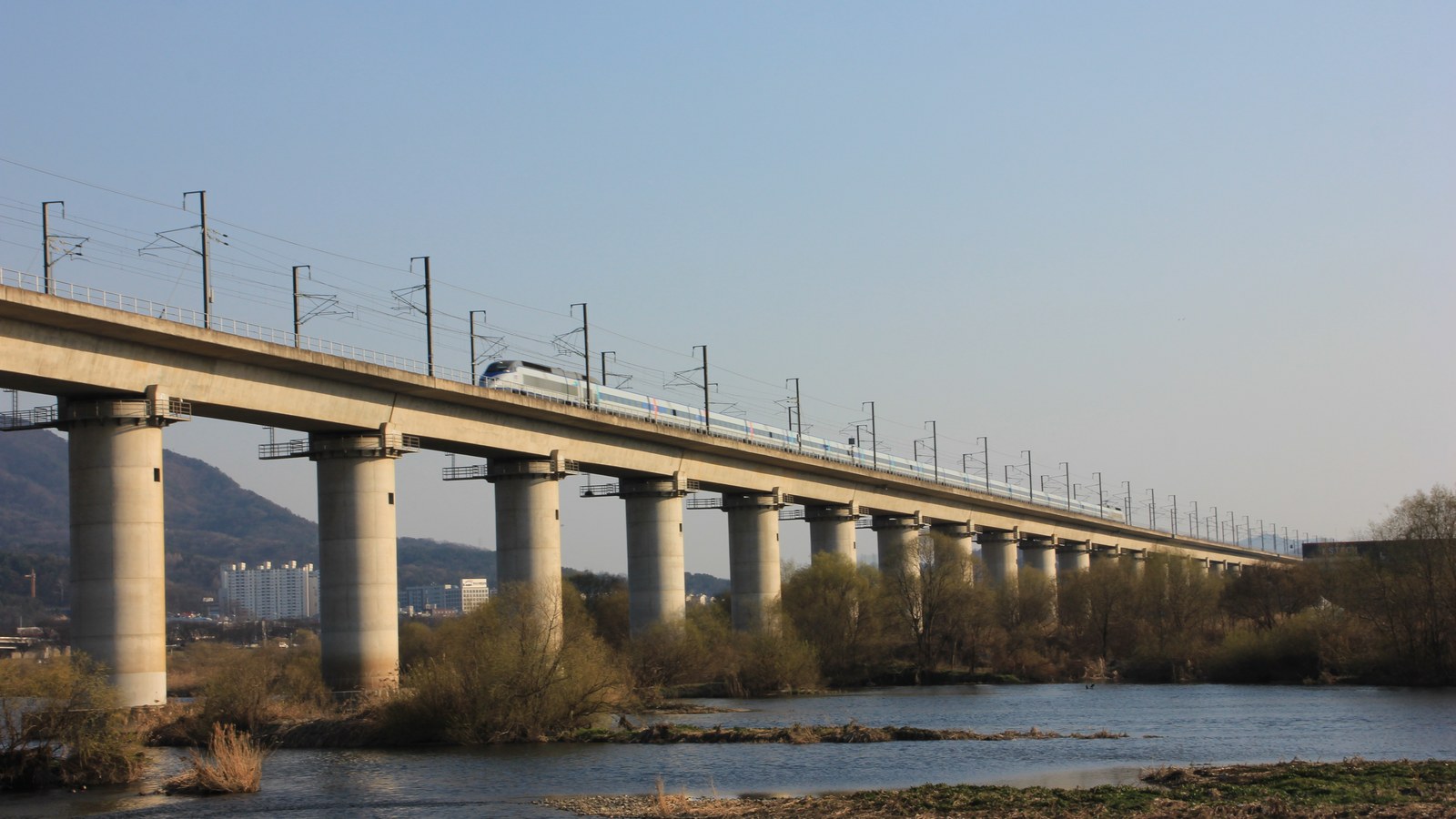
Take an early KTX from Seoul Station. VisitKorea lists the ride to Busan Station at about 3 hours, on the 447.1 km Gyeongbu Line. That "about 3 hours" is a typical time, not a guarantee for every departure. Look up your train in the Korail+ app or on www.korail.com and use the travel time shown there.
If Suseo Station is closer to where you are staying, you can leave from there instead. The two high-speed rail operators have merged, and since September 1, 2026, trains from Suseo are KTX trains, booked through the Korail+ app. We could not confirm on an official page whether a Korail Pass now covers Suseo departures, so check with KORAIL before you rely on a pass. For what the merger changed, see our KTX vs SRT guide, then compare today's times and fares in Korail+ or on www.korail.com. We are not quoting train fares here, because they change and KORAIL's booking site did not load from our network on November 29, 2026.
Busan Station is the start and end of the Gyeongbu Line in the city. Build in time at both ends: you will need a margin to reach the station for the ride back to Seoul. Check the last suitable train on the booking site; do not rely on a remembered last-train time.
HOW TO GET THERE
From Seoul: KTX from Seoul Station to Busan Station, about 3 hours (VisitKorea). A KTX from Suseo, on the former SRT route, is the other Seoul departure; book it in Korail+ and confirm the arrival station there.
From Incheon Airport, if you are skipping Seoul: VisitKorea describes a bus to Gwangmyeong Station (about 50 minutes) and a KTX from there to Busan Station (about 2 hours 40 minutes). Confirm both legs on the day.
In Busan: use Naver Map or KakaoMap for subway and bus transfers between the stops below. We did not have official English transfer times to cite for each leg.
Day 1: Yeongdo cliffs and Gwangalli lights
Morning: arrive and leave your bags if you need to. An early train gives you a full afternoon. If your hotel will not take the bags yet, plan a short wait or use luggage storage only where you can confirm it on the day.
Lunch: a Busan market. VisitKorea's Busan guide points to the traditional markets for fresh raw fish and seafood, plus snacks such as gimbap, tteokbokki and eomuk (fish cake). On a cold day, look for dwaejigukbap, a pork and rice soup that VisitKorea calls Busan's representative local dish. We are not listing restaurant names or menu prices. Walk the market, read the stall, and pay what is posted there, or use a card if the stall accepts one.
Afternoon: Huinnyeoul Culture Village. This is in Yeongdo-gu, at Yeongseon-dong 4-ga. VisitKorea says old houses on the seaside cliffs were remodeled in December 2011 into a culture and art village. The name comes from a winding stream that looked like white snowfall at the foot of Bongnaesan Mountain. It is open 24 hours, open all year, and free. Parking on the VisitKorea listing is also free, but the village is a walking place; the paths are on a slope, so wear shoes you can walk in for an hour or more. There is no official closing time to race, which makes it a good first stop after lunch.
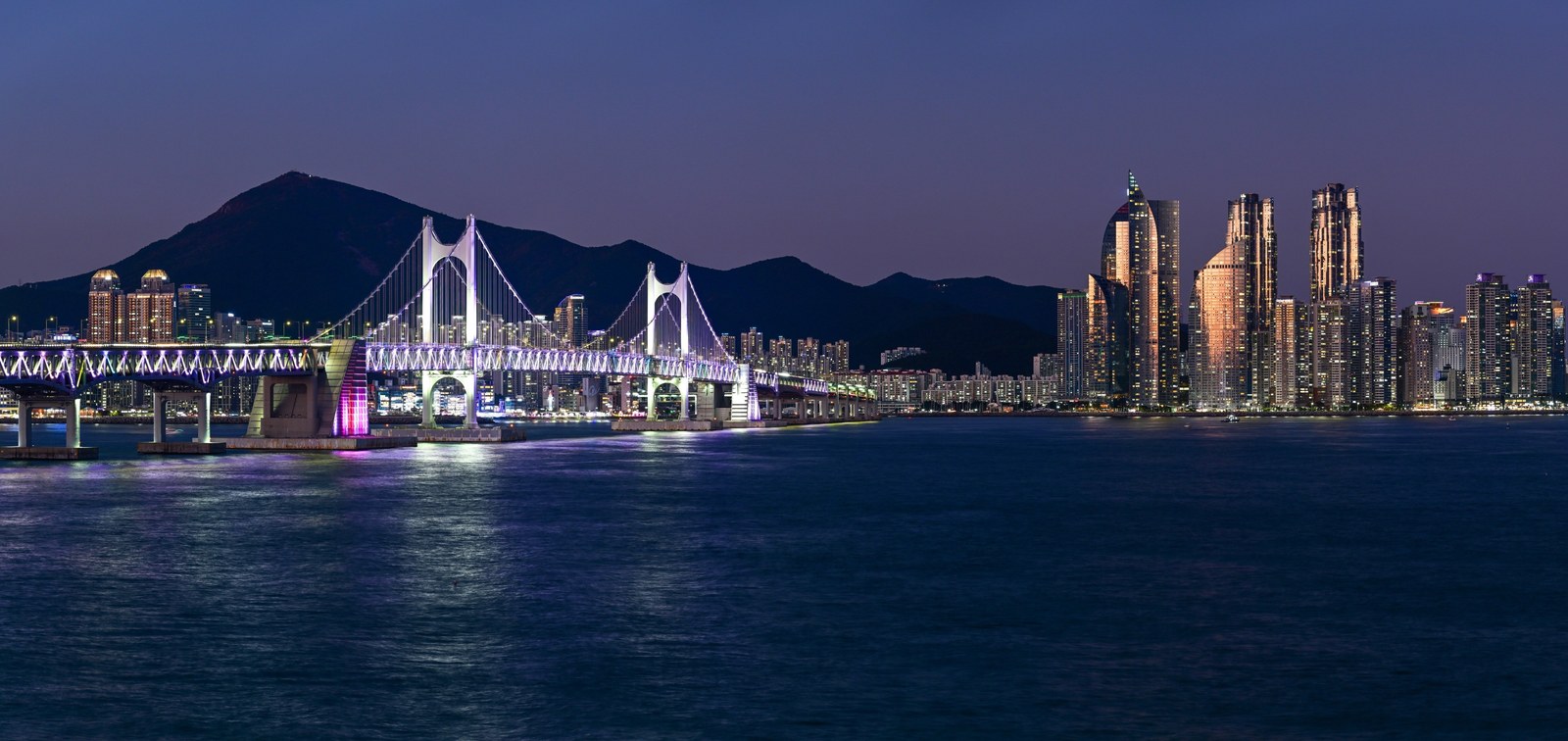
Evening: Gwangalli Beach. VisitKorea places the beach west of Haeundae, at 219 Gwanganhaebyeon-ro, Suyeong-gu. It is 1.4 km long and 25 to 110 meters wide, open 24 hours, open all year, and free to enter. Parking, if you come by car, is listed at 300 won for every 10 minutes; that is a parking fee, not a beach ticket.
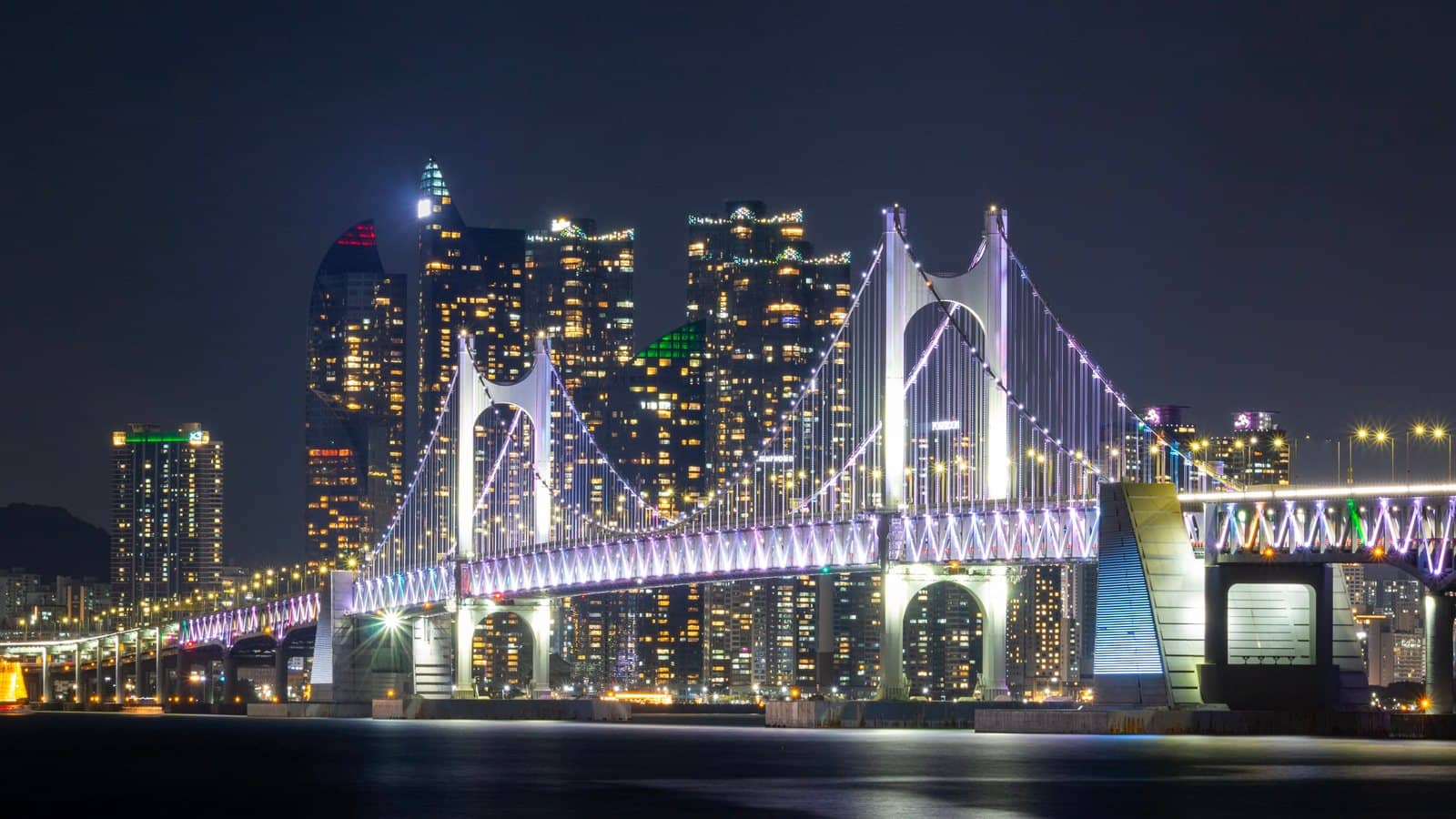
Most people come in the evening for Gwangandaegyo Bridge. VisitKorea describes the bridge as 7.4 km long, the longest bi-level bridge over the ocean in Korea, running from Namcheon-dong in Suyeong-gu to Centum City in U-dong, Haeundae-gu. It carries thousands of LED lights in a display that changes with the seasons. The beach is free, so you can stay as long as you are comfortable and then head to your hotel. If the wind is strong, have a warmer layer; VisitKorea calls the weather mild, not warm.
LOCAL TIP
Huinnyeoul and Gwangalli are free and open all day, so you can shift this schedule if your train is late. Keep the bridge lights for after dark; the beach is the viewing point VisitKorea highlights for the evening display.
Source: VisitKorea listings for Huinnyeoul Culture Village, Gwangalli Beach and Gwangandaegyo Bridge, opened November 29, 2026.
Day 2: A seaside temple and the Beach Train
Morning: Haedong Yonggungsa Temple. VisitKorea notes that most Korean temples are in the mountains, so this one on the coast in northeastern Busan, in Gijang-gun, is unusual. It was first built in 1376. The address on the VisitKorea listing is 86 Yonggung-gil, Gijang-gun. It opens at 04:30 and closes at 19:20, with last admission at 18:50. Entry is free, and it is open all year. Go in the morning so you still have the afternoon for the train. It is a working temple, so follow any signs on site about where you can and cannot go.
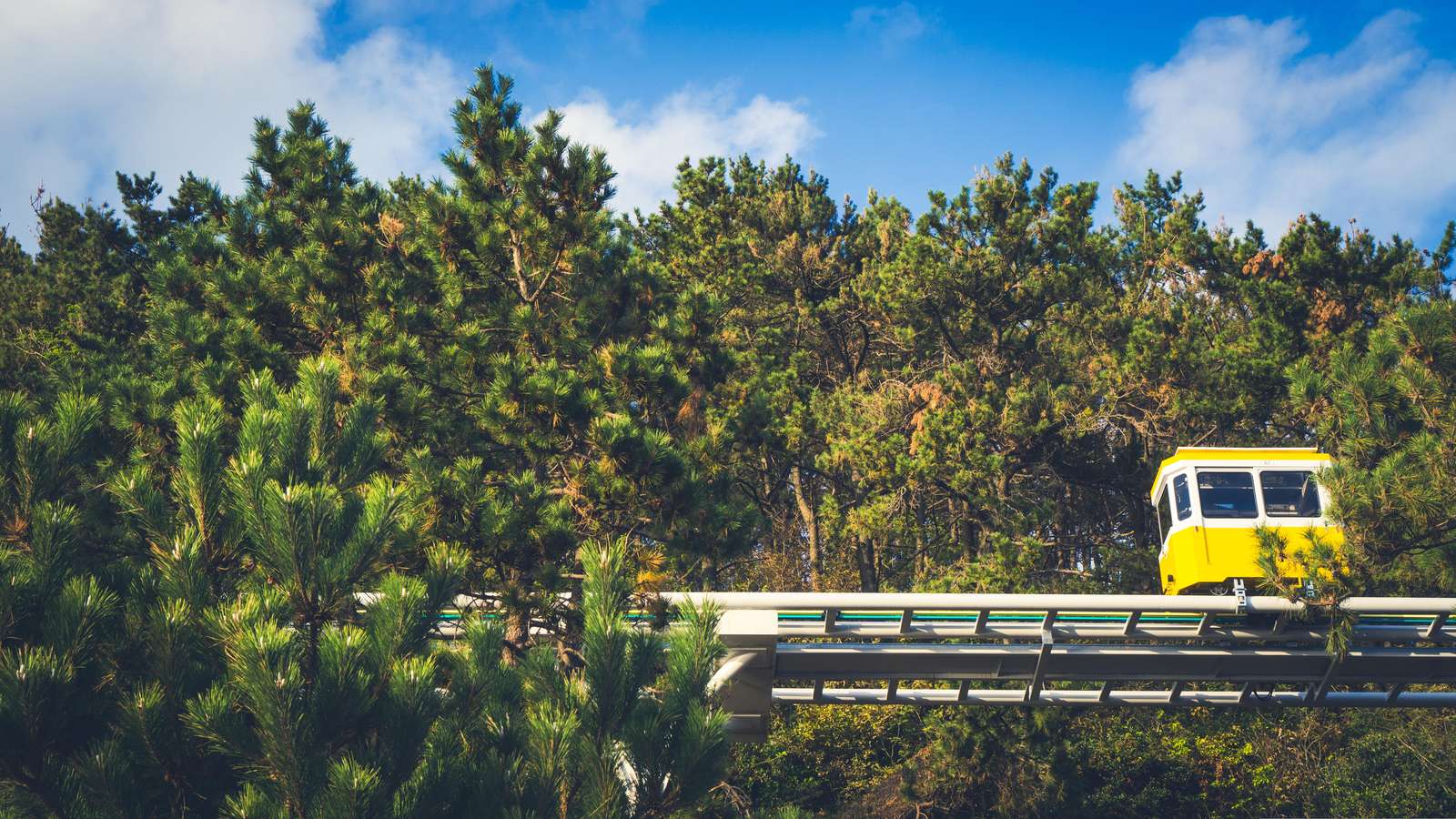
Late morning to afternoon: Haeundae Blueline Park. The Beach Train and the Sky Capsule run along the coast from Mipo to Songjeong. The operator's timetable page, opened November 29, 2026, lists the line as 4.8 km, with stations at Mipo, Dalmaji Tunnel, Haewol Skywalk, Cheongsapo, Daritdol Skywalk, Gudeokpo and Songjeong.
Winter hours on that official page (November, December, January and February) are 09:00-19:00 from Mipo and 09:00-19:00 from Songjeong. Other months have later last trains; do not use the summer hours in winter. The operator says hours can be adjusted for safety, that trains run as normal in rain, and that heavy rain or a typhoon can stop the service. Weekend and holiday times can also change, so look at the timetable on bluelinepark.com on the morning you go.
A one-ride adult ticket on the official fare page (opened the same day) is 10,000 won if you start at Mipo or Songjeong, and 8,000 won if you start at Cheongsapo or a small station. A one-ride ticket is one boarding. The operator says that if you want a return trip you need a two-ride ticket or an all-station ticket, and that you must get off at the terminal stations, Mipo and Songjeong. Other ticket types and discounts (children, groups, and so on) are listed on the same fare page; we are not copying every discount row here, because some discounts have ID rules. Check the fare page before you buy, including if you are traveling with children.
VisitKorea recommends the package fare: take the Sky Capsule from Mipo to Cheongsapo, see Daritdol Observatory (also called Daritdol Skywalk on the operator site) and Dalmaji Tunnel, then ride the Beach Train back to Mipo. Sky Capsule fares on the operator page are charged per car, not only per person. On November 29, 2026 the listed prices were 50,000 won for a two-seat car, 55,000 won for a three-seat car and 60,000 won for a four-seat car. Those numbers can change. Confirm them on the fare page before you pay. The official pages we opened are in Korean; if you need English help, ask at the ticket window and point to the train or capsule you want.
LOCAL TIP
Buy the Beach Train ticket that matches how many times you will board. A one-ride ticket is not a return ticket. The operator's fare page says you need a two-ride or all-station ticket to come back.
Source: Haeundae Blueline Park fare page, opened November 29, 2026.
Evening: KTX back to Seoul. Give yourself more time than the map suggests to reach Busan Station, especially if you finish at Songjeong rather than in the city center. Search the return train in Korail+ or on www.korail.com, with Suseo as the arrival station if that is closer to where you are staying, and work backward from the departure. We are not stating a last-train time, because that has to come from the booking site on your date.
If you have more time
The west side of Busan, with Songdo Cloud Walk, Gamcheon Culture Village and Jagalchi Market, is in our first-timer guide to Busan's five places. Those sights are a different set from the ones in this two-day plan, so you can swap a stop rather than try to cover both sides in a rush.
LOCAL TIP
If you only have one full day, keep either the cliff-and-bridge loop (Day 1) or the temple-and-train loop (Day 2). Both are on the water, and trying to force all four stops plus the rides between them into one short winter afternoon usually means you skip the evening lights or the last Beach Train.
FAQ
Is Busan worth it in winter? Yes, if you want sea views. VisitKorea describes the city's weather as mild year-round. Every stop in this plan is by the water, and three of the four sights are free. The Beach Train is the paid stop, and it does run in winter, with earlier last trains than in summer.
Does the Beach Train run in the rain? The operator says it runs normally in rain, but heavy rain or a typhoon can stop it, and hours can be adjusted for safety. Check the official timetable on the day.
How do I get between stops? Use Naver Map or KakaoMap for subway and bus transfers. We are not publishing a transfer time we have not confirmed on an official timetable. Busan Station is the start and end point of the Gyeongbu Line from Seoul.
How much is the Beach Train? On the official fare page checked November 29, 2026, a one-ride adult ticket was 10,000 won from Mipo or Songjeong and 8,000 won from Cheongsapo or a small station. Confirm the price on the operator page before you buy.
Do I need a ticket for Haedong Yonggungsa? No. VisitKorea lists entry as free, with last admission at 18:50 and closing at 19:20.
Found this useful? Save this guide for your trip, share it with whoever you're traveling with, and follow @simplyur.korea on Instagram for more Korea travel tips.
Related guides: First Time in Busan? 5 Places Worth Seeing · KTX vs SRT: What Changed in 2026
Operated by Bong Tour Co., Ltd.
The Simplyur Korea Letter
Korea travel dates, about once a month.
Dates, hours and entry rules for the weeks ahead. Each one is checked against an official source.
We email about once a month. Unsubscribe anytime. Privacy policy